
Here's the thing about AI: it's not just about crunching numbers faster. It's about seeing patterns, identifying risks, and, crucially, challenging our assumptions. And that's precisely what's happening with Alibaba (BABA) right now.
We've all seen the headlines: Alibaba's stock has been on a tear, climbing over 90% this year, fueled by its AI cloud unit and the demand for faster deliveries. Wall Street is practically tripping over itself to slap a "Buy" rating on it. But then comes TipRanks’ AI Analyst Rina Curatex, powered by OpenAI-4o, throwing a wrench in the works. It's downgrading BABA to "Neutral" and trimming the price target.
Now, I know what you're thinking: "Dr. Thorne, are you actually saying a downgrade is good news?" Well, buckle up, because the answer is yes—and here's why.
AI, in its purest form, is about objectivity. It's about stripping away the hype and looking at the cold, hard data. And what is that data saying? Curatex's analysis points to some very real challenges: weak free cash flow due to high spending, ongoing losses in the quick-commerce business, and rising debt. These aren't just minor speed bumps; they're potential roadblocks on Alibaba's path to sustained growth.
Think of it like this: Wall Street analysts are like seasoned drivers, relying on their experience and gut feelings. But AI is like the car's onboard computer, constantly monitoring every system, every sensor, and every potential hazard. Sometimes, the computer sees things the driver misses.
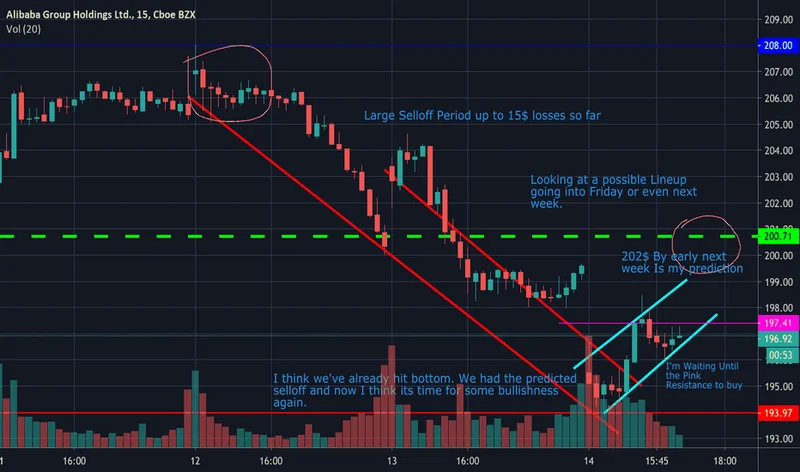
The White House memo alleging Alibaba provides technical support to the Chinese military is a big deal. The fact that shares dropped 4.5% shows the market is taking this seriously. Now, I'm not going to speculate on the geopolitical implications, but it's a reminder that even the most innovative companies operate within a complex web of global forces. White House says Alibaba provides tech support to Chinese military; shares fall By Investing.com
What's really fascinating is how the AI arrives at its conclusion. According to TipRanks, Alibaba scores a 69 out of 100 based on financial performance, bearish technical indicators, and valuation concerns. It's not just one factor; it's a holistic view. This isn't some simple algorithm; it's an AI combining insights from multiple models, including OpenAI's GPT-4o and Google's Gemini. It's like having a team of expert analysts working 24/7, cross-referencing data and identifying potential pitfalls.
But the real magic here is the potential for us to learn from this. Are the AI's concerns valid? What are the actual risks that Alibaba needs to address? How can Alibaba turn these challenges into opportunities? These are the questions we should be asking.
Here's where things get really exciting. Imagine a future where AI isn't just downgrading stocks, but actively helping companies improve. Imagine AI identifying inefficiencies, predicting market shifts, and even suggesting innovative solutions. It is an amazing thought!
That's the promise of AI: not to replace human analysts, but to augment them. To provide a data-driven reality check that helps us make smarter decisions. To see the forest for the trees, even when the market is caught up in the hype. When I first started in tech, I could only dream of having these kinds of advanced systems.
And the fact that the AI is flagging potential issues before they become major crises? That's a game-changer. It's like having an early warning system for the entire financial market. It means we can be more proactive, more resilient, and ultimately, more successful.
Of course, this raises some ethical considerations. How do we ensure AI is used responsibly? How do we prevent bias from creeping into the algorithms? How do we protect investors from blindly following AI recommendations? These are important questions, and we need to address them head-on.
But the potential benefits are simply too enormous to ignore. AI has the power to democratize investing, to level the playing field, and to create a more transparent and efficient financial system.
So, what's the real story? The numbers don't lie. Alibaba faces real challenges. But those challenges also represent opportunities. And thanks to AI, we can see them more clearly than ever before. It's a reality check, yes, but it's also a roadmap to a more informed and ultimately, more successful future.