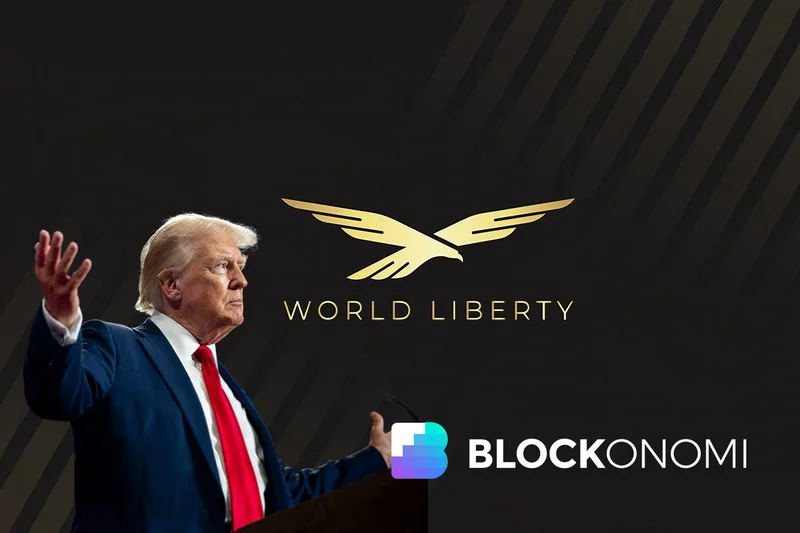
Last month, Donald Trump pardoned Changpeng Zhao (CZ), the founder of Binance, who'd pleaded guilty to failing to prevent money laundering. Binance also paid a hefty $4 billion fine. Now, throw in a Trump family crypto venture, World Liberty Financial (WLF), and a $2 billion investment from an Emirati fund into WLF, and you've got a recipe for… well, let's just say it's complicated.
The surface narrative is this: CZ gets a pardon, Binance props up WLF with software, and an Emirati fund pours $2 billion into WLF using its own crypto, WLFI. The implied narrative, as Harvard's Lawrence Lessig notes, is potential corruption. Is this a quid pro quo, or just coincidental timing? Lessig is careful to say there's no clear evidence, but the smell of impropriety is strong.
But let's dig deeper. The $2 billion investment is the key point. Austin Campbell, a former banker, says it vaulted WLF "from small time to the big leagues." Okay, but how big were they before? According to the report, WLF's fundraising round was only "partially filled," and they had a "handful of engineers." We're talking about a company that was barely off the ground. And this is the part of the report that I find genuinely puzzling.
Two billion dollars into a company with a partially-filled fundraising round? That's like using a firehose to water a houseplant. The Emiratis claim "business suitability" was the reason for choosing WLFI. Business suitability? The company had been on the market for five weeks. What kind of due diligence could have possibly justified that valuation? What metrics were they using?
The source called it "nuts". I'd call it statistically improbable.
And then there's the technology. Binance allegedly donated software to WLF. Again, the language is carefully chosen. WLF's lawyers admit Binance provided "freely available" software "simply to save WLF from wasting time." So, was it a custom-built solution, or an open-source library anyone could have downloaded? The difference matters. If it was bespoke software, that's a significant contribution. If it was off-the-shelf, it's just good housekeeping. The report doesn't clarify.
The article mentions that two weeks after the WLF deal, Trump announced the Emirates would invest in America and the U.S. would provide restricted AI chips. Correlation doesn't equal causation, of course. But it sure does raise eyebrows.
Here's where the numbers get interesting. The article states that the $2 billion deposited in WLF could be earning the Trumps and their partners $80 million a year in interest. (That's an implied interest rate of 4%.) That's a tidy sum, but it also gives CZ significant leverage. As one source put it, CZ "now controls whether [WLF] dies or lives. He has a sword over their head."
But consider this: if Binance still has $2 billion in WLF, that means WLF hasn't deployed that capital. They're just sitting on it, collecting interest. Is that the mark of a serious crypto venture, or a glorified savings account? Details on why the money hasn't been deployed are scarce, but it does suggest a lack of operational strategy.
The report mentions Trump's initial denial of knowing CZ. Trump later stated, "A lot of people say that he wasn't guilty of anything." This is classic Trump: deflect, deny, and then claim widespread support. But it also highlights the opacity of the pardon process. Who were these "very good people" who advocated for CZ? What was their rationale? We don't know. As reported on 60 Minutes, the pardon has sparked concerns over the use of presidential pardon power. Trump pardon of crypto billionaire sparks concerns over his use of the pardon power
The pardon itself is less about justice and more about influence. Whether it's a direct quid pro quo or just a "culture of giving," as Lessig suggests, the optics are terrible. The Trump family benefits, CZ gets a pardon, and the Emiratis get access to restricted AI chips (maybe). It's a messy situation, but the common thread is clear: money talks, even in the world of crypto. And in this case, it seems to be shouting.